

Selling a home can bring financial rewards, especially if your property has appreciated significantly over time. However, it also raises an important financial consideration: capital gains tax. Understanding how capital gains tax applies to home sales in the U.S. can help you make informed decisions, reduce your tax liability, and better plan for your financial future.
This comprehensive guide breaks down what capital gains tax is, when it applies, how to qualify for exclusions, and what strategies you can use to reduce the amount you may owe.
What Is Capital Gains Tax?
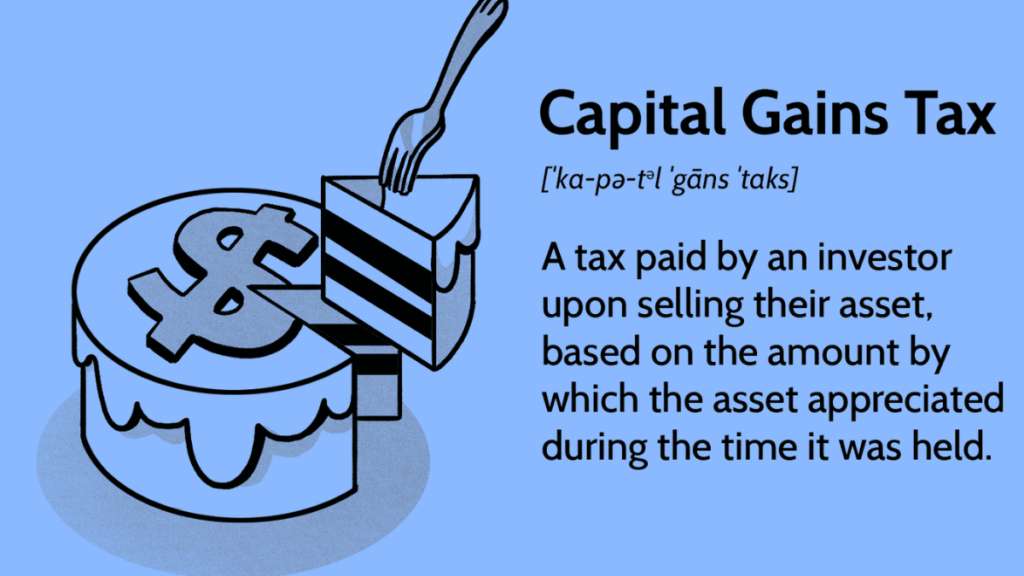
Capital gains tax is a federal tax on the profit you make from selling an asset. In the context of real estate, it applies when you sell your home for more than what you paid for it. The “gain” is calculated as the difference between your selling price and your original purchase price, adjusted for certain costs like improvements and selling expenses.
There are two types of capital gains:
- Short-term capital gains (for assets held less than one year)
- Long-term capital gains (for assets held longer than one year)
For most homeowners, real estate profits fall under long-term capital gains, which are taxed at a lower rate than ordinary income.
When Does Capital Gains Tax Apply to Home Sales?
Not all home sales are taxed. The IRS provides an exclusion rule for primary residences, which allows many homeowners to exclude a portion—or all—of their profit from taxation.
The Exclusion Rule (Section 121 Exclusion)
As of current tax law, if you meet certain criteria, you can exclude up to:
- $250,000 of gain if you’re single
- $500,000 of gain if you’re married and file jointly
To qualify for this exclusion, you must meet:
1. Ownership Test
You must have owned the home for at least two years during the five-year period before the sale.
2. Use Test
You must have lived in the home as your primary residence for at least two of the last five years.
3. Frequency Test
You haven’t claimed this exclusion on another home in the past two years.
If you meet all three conditions, you can exclude the allowed amount from your taxable income.
What Counts Toward the “Gain”?
Your capital gain isn’t simply the difference between the purchase and sale prices. You can adjust the gain by factoring in certain costs:
Add to the basis:
- Major home improvements (e.g., new roof, remodeling, additions)
- Legal fees and title costs
- Real estate agent commissions
- Closing costs
These expenses are added to your cost basis and reduce the total taxable gain.
Example Calculation
- Purchase Price: $300,000
- Home Improvements: $50,000
- Selling Price: $450,000
- Selling Costs: $25,000
Adjusted Basis = $300,000 + $50,000 = $350,000
Gain = $450,000 – $350,000 – $25,000 = $75,000
Since this gain is under the $250,000 exclusion for single filers, it would not be subject to capital gains tax.
When You Might Owe Capital Gains Tax
You may owe taxes if:
- Your gain exceeds the exclusion amount
- You do not meet the ownership and use tests
- You are selling a vacation home, investment property, or rental property
- You claimed depreciation deductions in the past (such as on a home office)
In these cases, some or all of your profits could be subject to capital gains tax.
Capital Gains Tax Rates
As of current federal law, long-term capital gains are taxed at:
- 0% if your income is up to $44,625 (single) or $89,250 (married, jointly)
- 15% for most people
- 20% for high earners (over $492,300 single, or $553,850 married jointly)
In addition, some sellers may be subject to the 3.8% Net Investment Income Tax (NIIT) if their income exceeds certain thresholds.
States may also charge capital gains tax depending on local tax laws.
Capital Gains Tax on Inherited Property
If you inherit a home and later sell it, capital gains are calculated using the stepped-up basis—the fair market value of the home on the date of the previous owner’s death. This often reduces or eliminates the taxable gain.
Capital Gains on Rental and Investment Property
Selling a rental or investment property doesn’t qualify for the primary residence exclusion. Gains on these types of properties are generally taxable and may also involve recapture of depreciation, which is taxed as ordinary income.
To defer taxes, some investors use a 1031 exchange, which allows for reinvestment into another similar property.
Reducing Your Capital Gains Tax Liability
Here are several legal strategies to reduce or eliminate capital gains taxes:
1. Live in the Property Before Selling
If it was a rental or vacation home, converting it to your primary residence and living there for two years may qualify you for the exclusion.
2. Keep Track of Improvements
Document all renovations, upgrades, and major repairs with receipts. These can be added to your basis and reduce your gain.
3. Time the Sale Wisely
If you expect a large gain, consider selling in a year when your income is lower to stay in a lower tax bracket.
4. Gift Property Strategically
Gifting property to lower-income family members may reduce overall tax if they’re in a lower capital gains bracket (be aware of gift tax rules).
5. Consult a Tax Professional
Capital gains laws are complex. A professional can help you navigate exclusions, deductions, and plan your sale effectively.
Conclusion
Capital gains tax can have a significant impact on the financial outcome of your home sale. The good news is that many homeowners qualify for substantial exclusions, especially when selling a primary residence.
By understanding the rules, maintaining good records, and preparing ahead, you can minimize your tax burden or eliminate it altogether. Whether you’re planning to sell soon or simply preparing for the future, knowledge is the key to keeping more of your home’s equity in your pocket.
FAQs
Q1: Do I have to pay capital gains tax if I sell my primary home?
Not necessarily. If you meet ownership and use requirements, you can exclude up to $250,000 (or $500,000 for married couples) of profit from tax.
Q2: What happens if I don’t live in the home for two years?
You may not qualify for the exclusion, and the entire gain could be taxable. However, partial exclusions may be available for certain hardships like job relocation or illness.
Q3: Are closing costs deductible when calculating capital gains?
Some closing costs, like agent commissions and legal fees, can be subtracted from your profit and reduce your taxable gain.
Q4: Do I have to pay state taxes on capital gains?
Possibly. Many states also tax capital gains, and rates vary. Check your state’s tax laws for specifics.
Q5: Can I avoid capital gains tax on a second home?
Only primary residences qualify for the exclusion. For second homes, consider living in it for two years before selling or explore a 1031 exchange if it’s an investment property.